Beyond Academics: The Life Lessons You Can’t Learn in a Classroom
✈️ Introduction
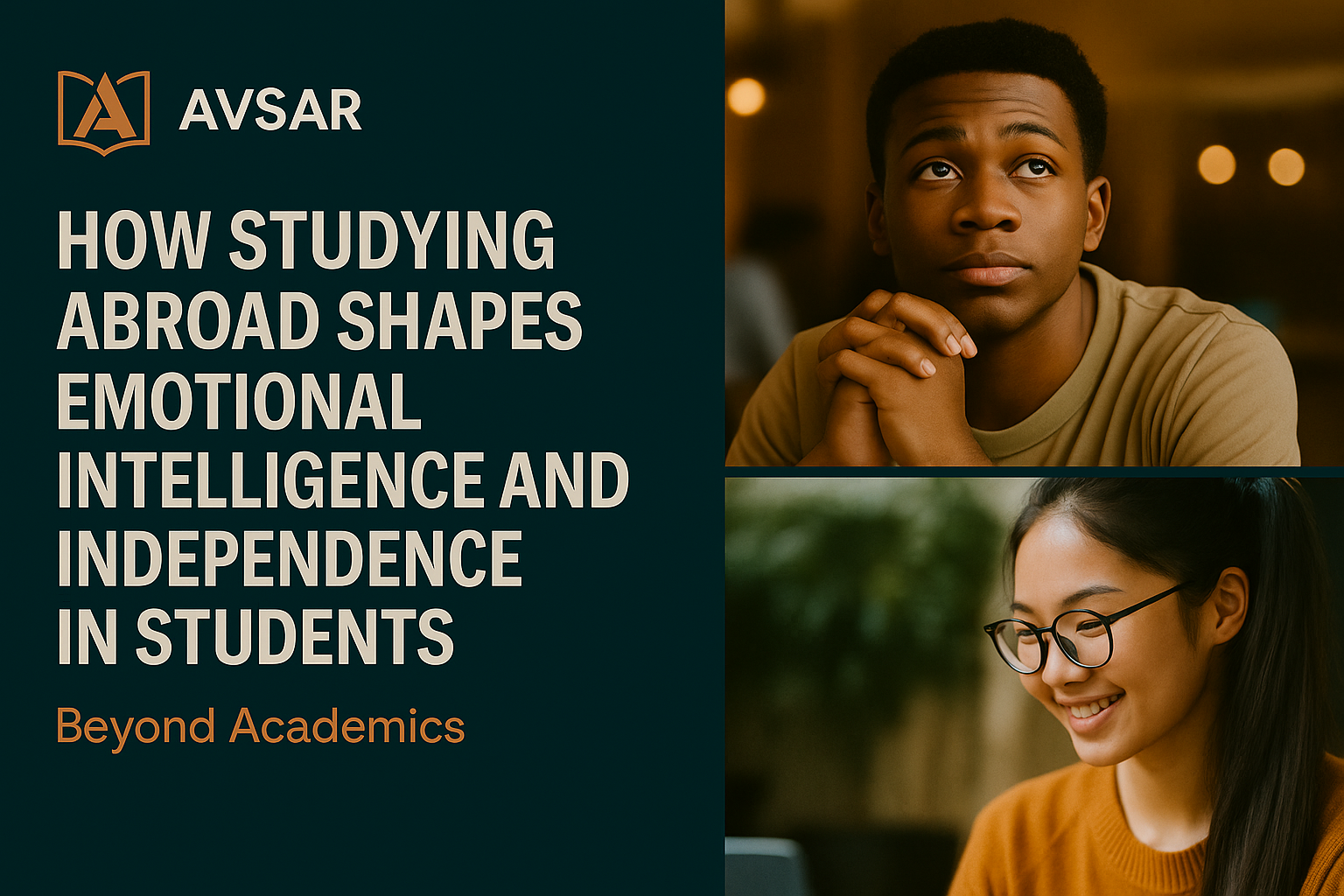
Studying abroad is often viewed through a technical lens—course selection, visa processing, tuition fees, and university rankings. While these are essential components, they only scratch the surface of what international education truly offers.
At its core, studying abroad is a transformational life experience. It challenges students to confront unfamiliar environments, interact with diverse cultures, and navigate real-world responsibilities—often for the first time in their lives.
Through this process, students not only gain academic qualifications but also develop emotional intelligence (EQ) and independence, qualities that are vital for success in today’s globalized world.
At Avsar, we have witnessed countless students evolve—becoming more self-aware, resilient, and globally competent individuals. This blog explores the lesser-known but deeply impactful emotional and personal growth that comes with international education.
💡 What is Emotional Intelligence—and Why is it Crucial?
Emotional Intelligence (EQ) is the ability to understand, manage, and express one’s emotions while also recognizing and influencing the emotions of others. It includes skills such as:
- Self-awareness
- Emotional regulation
- Empathy
- Social communication
- Decision-making under pressure
Unlike IQ, which is largely cognitive, EQ plays a pivotal role in leadership, teamwork, conflict resolution, and adaptability—qualities highly valued in both academic and professional settings.
🌍 How Studying Abroad Naturally Develops Emotional Intelligence
1. Adapting to Cultural Differences
Moving to a new country often comes with a wave of cultural surprises—different greetings, food habits, classroom behavior, and social norms.
Learning to accept and adapt to these differences helps students become more open-minded and empathetic.
2. Overcoming Communication Barriers
Even when studying in English-speaking countries, accents, slang, and context can make communication difficult initially. Students gradually learn to listen actively, clarify assumptions, and express themselves clearly—strengthening their interpersonal intelligence.
3. Navigating Homesickness and Emotional Lows
Being away from family support systems can trigger homesickness, anxiety, or self-doubt. In managing these feelings, students learn how to cope, seek help, and develop emotional resilience.
4. Building Relationships Across Cultures
Living and studying with people from different parts of the world nurtures global empathy and social adaptability. Students learn how to form meaningful relationships with peers who think and act differently.
5. Making Independent Life Choices
From managing finances to finding accommodation and even planning weekend groceries, students must make decisions daily. These decisions foster self-confidence and responsibility, further enhancing emotional maturity.
💼 How Studying Abroad Fosters Independence
While emotional intelligence is about how students manage themselves and their relationships, independence is about becoming self-sufficient—a trait international students must develop quickly.
🔑 Key Areas Where Independence Grows:
- Time Management: Balancing lectures, assignments, part-time work, and social life encourages better planning and prioritization.
- Financial Literacy: Students learn budgeting, handling banking systems, and making mindful spending choices.
- Self-Motivation: With no family to push or supervise, students must take initiative—whether it’s attending classes, finishing assignments, or networking.
- Problem-Solving: From navigating transport in a new city to resolving visa issues, students gain critical thinking and decision-making skills under real-world pressure.
This practical exposure results in a deep sense of self-reliance that students rarely develop when living at home.
👨👩👧 A Note to Parents: Growth Happens Through Challenges
For Nepalese parents, sending a child abroad is an emotional decision. Concerns about safety, loneliness, or poor influences are valid—but the reality is, the growth your child experiences while living independently is irreplaceable.
By allowing them to face challenges in a structured and educational environment, you’re preparing them not just for a degree—but for a life of confidence, clarity, and global competence.
At Avsar, we recognize that preparing students emotionally and mentally is just as important as academic or visa preparation. Our counseling approach includes discussions around homesickness, adaptability, and cultural transitions—ensuring families are equally informed and reassured.
🌱 Final Thoughts: The Unseen Benefits of Studying Abroad
The next generation of professionals, leaders, and changemakers will need more than technical degrees—they will need empathy, resilience, cultural awareness, and self-leadership.
Studying abroad offers the perfect environment to cultivate these skills. It teaches students how to:
- Handle emotions under stress
- Live with integrity and self-direction
- Respect and collaborate with people from different backgrounds
- Navigate uncertainty with courage and clarity
These are life lessons that no textbook can teach—but that the world desperately needs.
🎓 Start Your Journey with Avsar
Whether you’re a student looking to grow beyond borders or a parent seeking the best for your child’s future, Avsar is here to guide you with honesty, care, and expertise.